سخنراني علمي ـ تخصصي توسط اساتيد دانشگاه آلبرتا ـ كانادا

دوشنبه ۱۳۸۹/۳/۱۷ ـ ۱۳:۳۰ الي ۱۵:۳۰
آمفيتئاتر دانشكده مكانيك
Speakers:

Professor M. David Checkel
Department of Mechanical Engineering
University of ALBERTA
Title of talk (13:30 – 14:30):
RECENT HISTORY AND CURRENT TRENDS IN LCA
Life Cycle Assessment for better engineering decisions
Abstract
Life Cycle Assessment has only recently emerged as an engineering topic and is still being developed as an engineering tool. This talk gives a brief history of LCA efforts, development of standard methods and examples in a variety of areas.
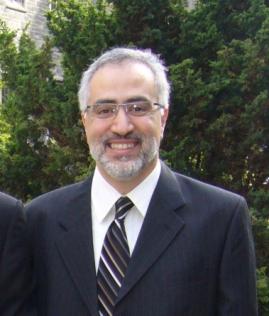
Professor Alidad Amirfazli
Associate Chair (Research(
Department of Mechanical Engineering
University of ALBERTA
Title of talk (14:30 – 15:30):
PLAYING WITH WATER DROPS
Drops Adhesion, Shedding and Impact onto surfaces
Abstract
Impact of drops onto surfaces, its adhesion onto surfaces and its incipient has many diverse applications including airfoil icing, spray cooling, enhanced oil recovery, and water management for fuel cells. In this talk, first, principles of drop adhesion onto a surface are discussed and our latest model to describe and estimate the adhesion force of a drop onto a surface will be presented. Next, we use surface science and fluid dynamics principles to explain incipient motion and dynamic aspects of drops exposed to shearing airflow. Through experiments with single drops of water, hexadecane, and PDMS liquids(0.5-100 μl) on PMMA, Teflon, and a superhydrophobic aluminum surface(SHS), wetting parameters such as surface tension, drop shape and contact angle are found to be major controllers of the minimum required air velocity for drop shedding. Exponential functions are proposed that relate air velocity to drop base length and projected area SHS are seen to shed drops more easily compared to the other surfaces. Finally, a comparative study of drop impact onto microtextured superhydrophobic surfaces with smooth hydrophilic surfaces will also be discussed. Results on a hydrophilic surface show that curves of drop spread factor evolution collapse on one single curve if time is scaled by V-1/2 , suggesting that drop evolution characteristic time most likely scales with We-1/4. Drop spreading on a SHS is qualitatively different, since characteristic time of drop evolution does not appear to be influenced by impact condition, in particular impact velocity, for moderate We numbers.