Physics


About Us

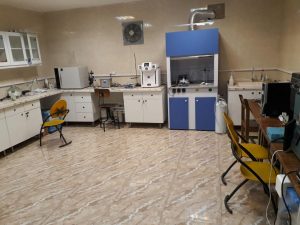
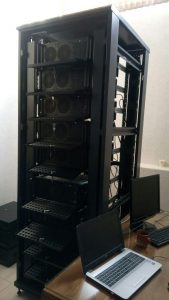
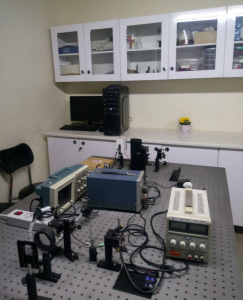
The Faculty of Physics provides research opportunities to the students in a wide variety of topics and specializations in fundamental and applied physics. Educational programs in this faculty provide the means to the students to immerse themselves into fundamentals of the nature, and cutting-edge technological innovations.


Our History
 

Physics, as a subject concerned with the observation and understanding of all basic phenomena in the categories of mater and energy, forms the basis of all the other natural sciences right up to life sciences and medicine as well as the bases for engineering and technology. The Faculty of Physics interests mainly revolve around fundamental and applied physics (with more emphasis given to the latter) in a wide variety of topics and specializations. The Faculty members and students work on problems where extreme conditions may reveal new behavior; from cosmology (the cluster of galaxies or the entire universe) to elementary particle physics; from collisions of nuclei at low energy to the effects of interaction of radiation with matter which are important to industrial and medical applications; from individual atoms to unusual materials, such as high temperature super conductors and those that are important to micro-electronics to nanotechnology and biology.


Research

The Faculty of Physics focus of research is on the following areas:


Condensed Matter Physics


Core research areas:

  • Bioelectric Artificial Organs Laboratory
  • Solar Cells
  • Quantum Dots
  • Nano-Electronics
  • Room Temperature Superconductors
  • Super fluidity
  • Low-Dimensional Semiconductors
  • Magnetic Materials
  • Topological Color-Codes
  • Thin-Films
  • Micro-Fluidity
  • Structural Analysis of Materials
  • Transport Phenomena


Nuclear Physics ​​​​​​​

Core Research Areas:

  • Radiation therapy (BNCT, Proton Therapy, Brachytherapy)
  • Nano Radiosensitizers
  • Neutron Reflectometry
  • Few-Body Systems
  • Nuclear Structure Theory
  • Computational/Numerical/Monte-Carlo Studies
  • Well-logging
  • Nuclear Gauge design
  • Radiation Application in industrial
 

AMO/Plasma Ph​​​​​​​ysics

​​​​​​​Core Research Aeras:

  • 3D Printing
  • Laser and Optical Therapy
  • Plasma Physics
  • Plasma Modeling & Simulation
  • Plasma Instabilities
  • Plasma -Surface Interaction
  • Biophotonics


Astrophysics, Cosmology and Gravitation ​​​​​​​

Core Research Areas:

  • High-Energy Astrophysics
  • Cosmic Rays
  • Extensive air showers
  • Cosmology
  • Black hole physics
  • Quantum physics in Cosmos
  • Modified Gravity Theories
  • Loop Quantum Gravity


Prominent Research Labs:

Nano Physics Lab


Main research activities of the lab:

  • Design and manufacturing of nanostructured
  • Optoelectronical devices like solar cells, LEDs, …
  • Photocatalytic materials for H 2 generation
  • Super hydrophobic coatings for self-cleaning systems
  • Two dimensional materials


Numerical Physics Lab

The main research activities of the lab:

  • Monte Carlo-based calculations
  • Machine learning
  • Molecular dynamics
  • Flowing in fractured and porous media
  • Medical physics-related calculations
  • Calculations of micro-fluidity
  • Stochastic calculations
  • Analysis calculations for few-body systems
  • Software-based numerical calculations
  • Optimization of configurations for particle transport in materials
  • Numerical methods for structural analysis of the materials
  • Single Purpose and Multi Purpose Monte Carlo Codes (Train and Run) such as MCNP, GEANT4, GATE, FLUKA


Biophotonics Lab

The main research activities of the lab:

  • Construction of laser device like LDV (laser Doppler vibrometer).
  • Drug delivery by designing of composite nanoparticles
  • Laser therapy of cancerous disease.
  • Signal processing and noise reduction.
  • Vibration and velocity measurement by Construction of LDV device.


Nuclear Physics Lab

  • Application of Radiation Detectors (Scintillators such as NaI(Tl), BaF2 as well as Liquid Scintillators, Gaseous Detectors such as Geiger ,BF3
  • Gamma Radiation Detection and Spectroscopy: Qualitative and Quantitative Analysis
  • Alpha and Beta Detection
  • Shielding
  • Safety studies


Academics

The Faculty of Physics offers B.Sc, M.Sc and PhD programs in a diverse fields of study. This faculty comprises of three academic departments and offers the following programs:


Programs and Degrees:

BSc MSc PhD
General Physics Condensed Matter Physics


Nuclear Physics

AMO/Plasma Physics

Gravitation and Astro-Physics

Condensed Matter Physics


Nuclear Physics


Scientific Journal

Department of Nuclear Physics publishes a biannual international scientific-research journal jointly with Nuclear Society of Iran (http://rpe.kntu.ac.ir). The journal provides a high quality medium for publication of substantial, original and scientific papers on the development and the enhancement of radiation physics and radiation engineering, and facilitates communication among physicists, to publish the results of research, develop collaboration between researchers from different research centers and universities in all over the world.


Read More


Contact Us

Address: Faculty of Mathematics, K. N. Toosi University of Technology,

Daneshgah Blvd., Ehsan Street Exit, East Zeynoddin Highway, Tehran, Iran.

Postal Code: 19967-15433

P. O. Box: 16765-3381

Tel: +98-21-7712-5070 and +98-21-77125254

Fax: +98-21-7712-5291

Email: mathdep@kntu.ac.ir